Company for electrophysical
Basement drying
We have been providing basement dehumidification services throughout Switzerland for over 10 years. Both the DRYMAT® system for electrophysical drying and our methodology are ÖNORM-certified.
Homepage › Basement drying
Cellar drying from the inside
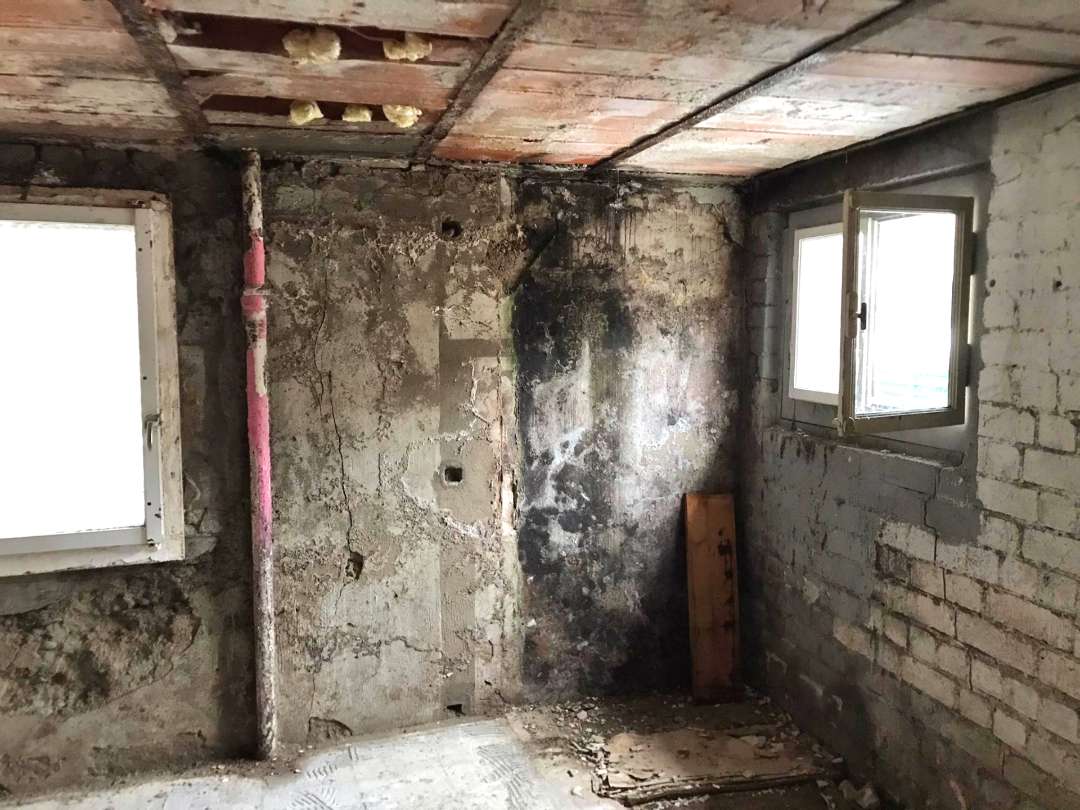
When it comes to «basement dehumidification», most people mistakenly think of powerful building dryers. While dehumidifiers are well suited for drying out the building fabric immediately after water damage, they can, on the other hand, lead to an intensification of the moisture problem in the medium term in damp old buildings and cause lasting damage to the building fabric.
How does it happen? The actual cause of damp walls is usually neither the moisture nor the leakage of the walls, but physical properties of the building fabric, which cause the wall to absorb the moisture.
The rapid drying of the walls by means of a building dryer increases the salinization of the wall. As a result, the basement wall absorbs even more moisture, which also causes more mineral salts to enter the building structure. Part of the moisture evaporates on the inside, and the dissolved salts crystallize out and increase in volume. Over time, this leads to spalling and lasting damage to the building fabric.
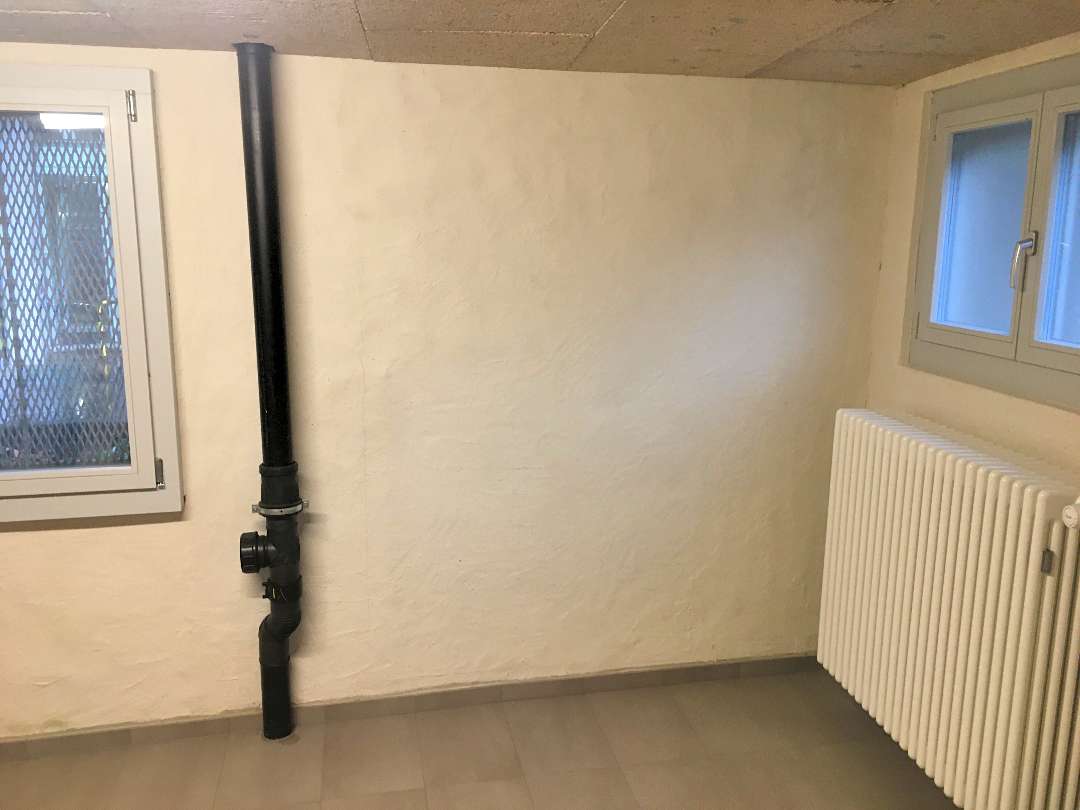
Electrophysical cellar drying with the DRYMAT® system induces a positive electrical potential in the wall, this effectively protects the wall from rising damp. The residual moisture in the wall evaporates within 0.5 and 3 years - the building becomes dry down to the bottom of the floor. Contact us without obligation.
Our services
- Identification and analysis of the causes of moisture
- Electrophysical basement dehumidification with the DRYMAT® system
- Intelligent basement ventilation to accelerate the drying process
- Moisture measurement 6 months after installation
Your advantages
- Advice from experienced moisture experts
- Drying of the building substance down to the basement floor
- Guaranteed success thanks to ÖNORM-tested process
- Cost transparency as a matter of course

Contact us without obligation
Do you have any further questions or may we prepare an offer for you?
Get in touch with us without obligation. We look forward to your inquiry!
Get in touch with us without obligation. We look forward to your inquiry!
Tobias Bayer
Managing Director

How much does basement dehumidification cost, roughly?
Electrophysical basement dehumidification with DRYMAT® costs approximately CHF 15,000 to 20,000 for a house with a floor area of 60 m². This is only a rough estimate, which can vary significantly from case to case depending on the actual work involved. Contact us without obligation for an individual offer.
What consequential damage can occur with damp building fabric?
Potential consequential damages of damp building fabric are increased heating costs, uncomfortable room climate, musty smell as well as mold and health problems for the inhabitants of the house. Over time, damp walls lead to lasting damage to the building fabric and thus gradually reduce the value of a property.
Does electrophysical basement dehumidification succeed in every case?
Yes, both the DRYMAT® system and our approach to its application are ÖNORM-certified. However, before we can use the system, we have to carry out a detailed analysis of the causes of moisture and the condition of the building fabric. If it is a pressing source of moisture or if there are cracks or major damage to the building envelope, the DRYMAT® system can only be used as a supplement.
Why a cellar dehumidification from Haustrocknung.ch?
We have been the exclusive provider of the DRYMAT® system in Switzerland since 2010. Electrophysical cellar dehumidification is an active process that permanently dries damp walls down to the cellar floor. Our process is ÖNORM-certified and does not involve any risks in terms of building statics, the environment or health.
How much does basement dehumidification cost in Switzerland?
The cost of electro-physical basement dehumidification using the DRYMAT® system for a house with a floor area of 60 m² ranges from approximately CHF 15,000 to 20,000. This is only a rough estimate and may vary significantly on a case-by-case basis, depending on the actual scope of work. Ask us for an individual offer without obligation.
What factors does the price depend on?
The price depends on the following factors: Length and accessibility of the walls, material of the walls, requirements for aesthetics, duration of the journey.
What are the annual electricity costs?
The DRYMAT® system incurs electricity costs of approximately CHF 50 per year. These costs are primarily due to the consumption of the DRYMAT® control unit. Only an electrical potential is induced in the wall.
How long does the DRYMAT® system warranty last?
We grant a 10-year guarantee on the DRYMAT® system.
Why do damp basement walls occur?
In most cases, the walls of the affected objects have structural properties that cause them to absorb moisture, similar to a sponge. This effect is promoted by the negative electrical landing of the walls. More on this in the «Damp walls» guide
How does electrophysical basement dehumidification work?
With the installation of the DRYMAT® system, we ensure that the walls have a positive electrical potential in relation to the environment. As a result, the wall can no longer transport the moisture upwards. Thus, the walls are newly protected from moisture.
What are the advantages of basement dehumidification by electroosmosis?
Electro-osmosis actively regulates moisture levels in the wall and is thus able to dry out damp walls and floor slabs all the way down to the foundation footing. Unlike most methods, electro-osmosis does not require the use of hazardous chemicals and is safe for both people and the environment.
What should you keep in mind when dehumidifying a basement?
Correct identification and mitigation of the cause of moisture is crucial to the success of cellar dehumidification. In particular, building dryers should only be used for a short time, as moisture and salts could be drawn in from outside. This increases the salt concentration and can permanently increase the moisture content of the masonry. More on this in the guide «Dehumidify basement»
When can DRYMAT® be used?
The DRYMAT® system is effective for damp walls caused by a non-pressurized source of moisture, such as seepage water. It also effortlessly handles heavily dampened walls where moisture has risen several meters.
Where can electrophysiological wall dehumidification not be used?
DRYMAT® is not suitable for drying buildings after water damage. Furthermore, the DRYMAT® system cannot be used if there is a source of rising damp, such as an adjacent water vein, or if the building envelope has cracks or holes through which water is penetrating.
Can DRYMAT® be used on any building material?
Yes, DRYMAT® can generally be used on all types of building materials—including rubble stone walls or masonry made of vapor-tight clinker bricks, where moisture can rise through the joints. However, it is essential that the moisture has a way to escape from the building material. We carefully assess at the outset whether this requirement is met.
Can you guarantee the results of DRYMAT®?
Yes, the DRYMAT® system and the procedure for using it are ÖNORM-certified. When we use it, we guarantee its results, which we can prove in periodic measurements.
How long does electrophysical basement dehumidification take?
After installing the DRYMAT® system, the drying process takes between 0.5 and 3 years. This can be accelerated with a smart basement ventilation system. Installation of the DRYMAT® system takes approximately 3–5 workdays for a house with a floor area of 60 square meters.
How does the installation of the DRYMAT® system proceed?
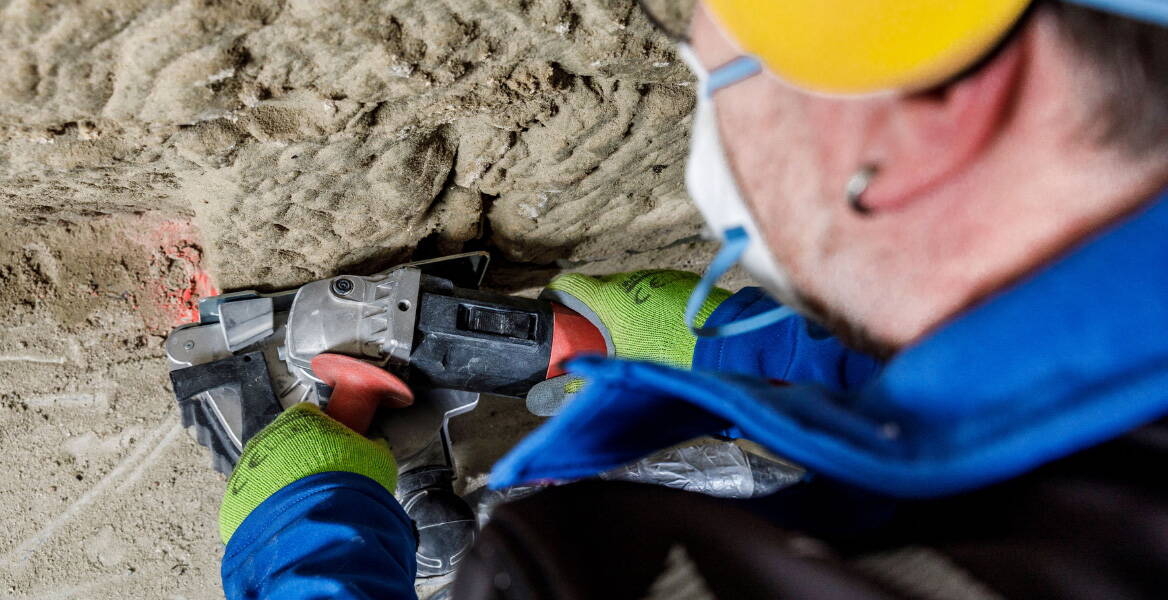
First, we drill holes for the electrodes. Second, we mill narrow slots for the electrode wiring for the DRYMAT® system. Third, we install the electrodes and connect them to the control system. Fourth, we test the installation and commission the system. Then we plaster over the installation slots.
How high is the noise and dirt pollution during assembly?
During the drilling and milling work, it is relatively noisy in the rooms concerned. Only a little dust is generated, especially since we use industrial vacuum cleaners with dust extraction hoods for drilling and milling.
Does the system switch off automatically after drying is complete?
No, if you turn off the system, moisture can again rise into the building fabric, which would not be useful.
Questions & Answers
J. F. from Bern says:
«The DRYMAT® works trouble-free, reliably and completely noiselessly. One would almost forget about the wall drying system if it weren't for this remarkable increase in living comfort.» ➝ other references

Cost of basement dehumidification
The DRYMAT® electrophysical drying system, for example, costs approx. CHF 15,000 to 20,000 for an EFH with 60 sq.m. floor space. This includes the entire processing of the order including analysis, installation and follow-up measurement. Added to this are the operating costs of approx. CHF 50 per year. Maintenance work is not included. At your request, we will be happy to come by to perform a re-measurement.
In contrast, the drainage of very damp walls in the same house, for example by means of a drainage of the basement walls, costs approx. CHF 45,000 - 60,000. This is mainly dependent on the costs for earthworks, if the renovation is to be carried out from the outside. The waterproofing in the narrower sense costs about CHF 350 per square meter in addition to the renovation.
You can find more info in the guide «Dehumidify basement»
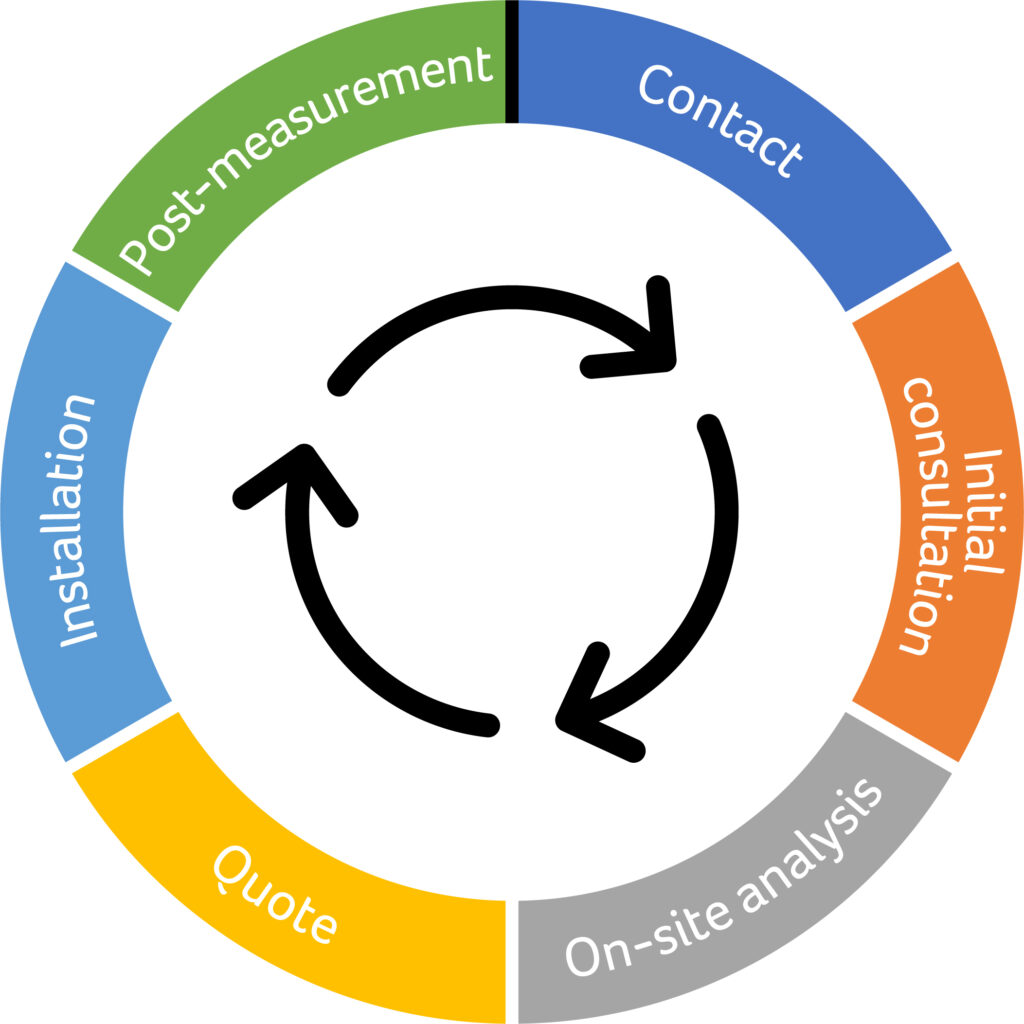
Order processing
- Initial telephone consultation: After you have contacted us via the registration form, we will call you for an initial consultation with our building experts, during which we will try to classify the extent and nature of the moisture damage. Thereby we show you which possibilities of damage repair we can offer.
- On-site analysis: If interested, we analyze the damage in the second step on site of the affected object. For this purpose, we carry out measurements to identify the cause of moisture as precisely as possible.
- Expert opinion / quotation: We then prepare either an expert opinion or a quotation for you. On the basis of the offer you decide whether you want a renovation. The installation of the DRYMAT® system takes about three working days for an average single-family house.
- Installation of the DRYMAT® system: In the process, we anchor electrodes in the damp masonry as well as in the floor and mill narrow slots, into which we subsequently lay the cabling. The milling work causes noise in the cellar. However, there is very little dust, especially since we only mill with an exhaust hood and industrial vacuum cleaner.
- Re-measurement: Then we mount the control unit and connect it to the mains (230 V). Finally, we plaster the slots so that, apart from the control unit, nothing else is visible of the dehumidification system. If you wish, we can make one or more periodic measurements after the renovation.